




Community Relation
Challenges and Commitment
GGC operates with a strong commitment to creating shared value with communities and society, ensuring a balance between business performance and its responsibilities to all stakeholder groups. GGC focuses on improving quality of life and supporting economic, social, and environmental development through community participation and ongoing social responsibility initiatives. These efforts aim to reinforce stable and sustainable organizational growth.
Key Stakeholders

Employee

Community

Government

Customer
For additional information on stakeholder engagement: Stakeholder Engagement
Goals


Key Performance in 2025

Management Approach
Corporate Social Responsibility Strategy
GGC has established a corporate social responsibility framework that aligns with the company’s operating context and the strategic direction of the GC Group. The approach aims to ensure that GGC’s CSR project portfolio corresponds with business direction and sustainability trends, while responding to stakeholder needs and reflecting GGC’s sustainability role based on ESG principles to create value and enhance quality of life.
GGC plays a key role in driving CSR initiatives under its CSR and Sustainable Development Strategy, covering essential dimensions such as organizational strength, growth, and long-term sustainability for all stakeholder groups. These initiatives focus on contributing to economic development, improving quality of life, supporting education, and fostering environmental awareness at the community level, with the ultimate goal of achieving true sustainability.
GGC continues to advance its CSR strategy by enhancing sustainability across the entire value chain. These efforts include strengthening CSR management systems to increase efficiency and effectiveness (CSR Portfolio), improving quality of life, conserving and efficiently using natural resources, enhancing energy efficiency, and contributing to social and environmental development to foster ongoing trust and confidence in GGC.
Corporate Social Responsibility (CSR) Strategy
GGC is committed to creating value for surrounding communities and society through its social responsibility initiatives, with the aim of supporting economic development, enhancing quality of life, and preserving the environment in parallel with its business operations. GGC conducts comprehensive impact assessments to identify and manage potential negative impacts on local stakeholders and continuously implements capacity-building projects and collaborative activities with stakeholders.
GGC carries out social responsibility initiatives and community engagement efforts surrounding the areas of its Methyl Ester Plant 1 in Map Ta Phut Subdistrict, Rayong Province, and Methyl Ester Plant 2 in Khao Sok Subdistrict, Chonburi Province. These efforts include community visits, local CSR activities, and ongoing dialogue to understand community needs, gather feedback, and jointly address concerns related to GGC’s operations.
Community Stakeholder Impact Assessment
GGC prioritizes effective communication by providing clear contact channels and regularly conducting surveys on community engagement initiatives. GGC also holds regular meetings with community stakeholders to exchange views and identify emerging concerns. In addition, GGC has established an efficient monitoring and grievance mechanism to ensure that any complaints or concerns are reported, addressed, and resolved appropriately and transparently.
For additional information on Materiality Assessment: Materiality Assessment
For additional information on Human Rights Assessment: Human Rights Assessment
Community Capacity Development
GGC implements the “GGC Dialogue: Executives Meet Communities” program annually to strengthen relationships between management, employees, and communities. The program aims to engage 25 communities located around Methyl Ester Plant 1 in Map Ta Phut Subdistrict, Rayong Province, and 4 villages in Khao Sok Subdistrict, Chonburi Province. The program includes communication on GGC’s business operations, social responsibility activities, and safety and environmental performance to foster understanding among community members. The initiative emphasizes two-way engagement by providing opportunities for community members to raise questions and share opinions to build mutual understanding and trust.
Objectives of the Community Engagement Program
- Enable management and employees to build relationships with communities and share information regarding GGC’s business operations, social responsibility activities, and safety and environmental standards at its plants.
- Provide a platform for management and employees to engage with communities, exchange knowledge, and better understand community needs, challenges, and local context.
- Encourage community members to ask questions, share opinions, and provide suggestions directly to GGC’s management. This information supports GGC in addressing concerns and refining its CSR strategy.
This program is a key approach to demonstrating GGC’s social responsibility, strengthening positive community relations, and driving long-term sustainable community development.
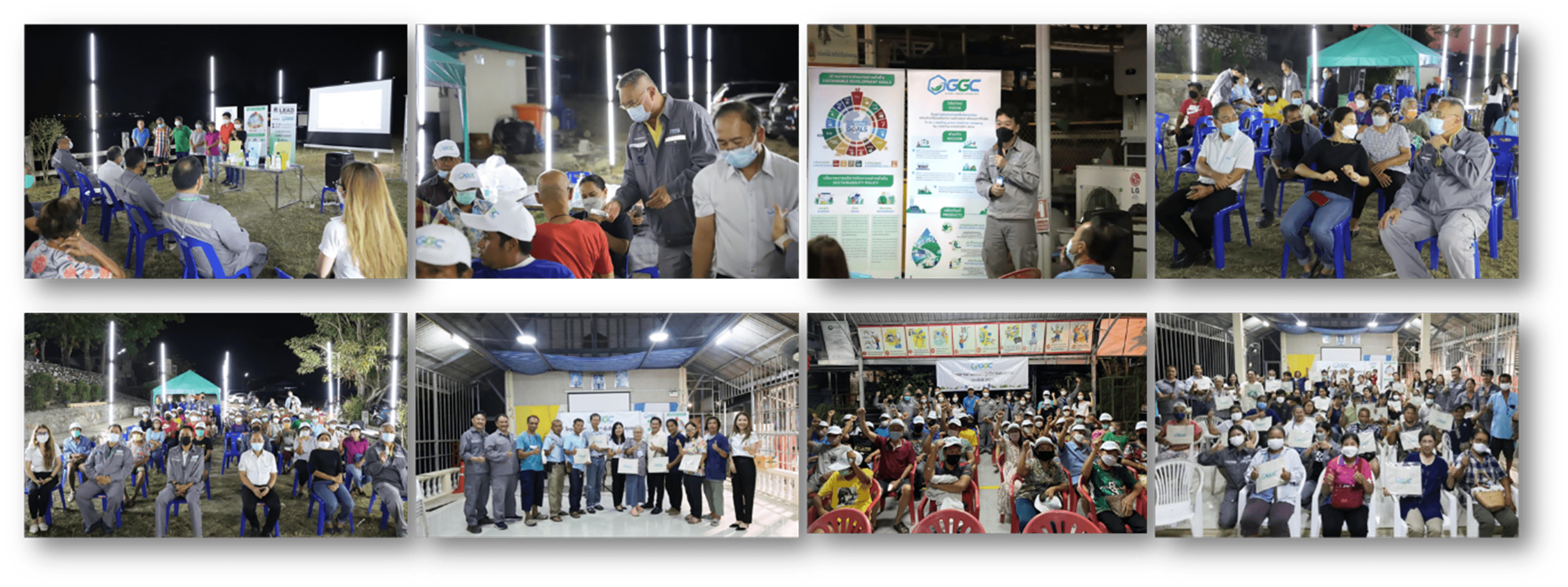
In addition, GGC also continues to work with communities and community enterprises to improve quality of life by creating livelihood opportunities, supporting education, and promoting income-generation initiatives. These efforts help improve community well-being in a tangible and sustainable manner.
Implementation of Social Responsibility Projects
GGC places strong emphasis on continuously improving the quality of life in communities and society by promoting well-being, increasing income, supporting local economic development, and advancing human capital. GGC therefore implements corporate social responsibility (CSR) projects and activities that not only support business growth but also deliver long-term value to surrounding communities and society. In the past year, GGC worked in collaboration with government agencies, private sector partners, and local communities to implement the following CSR projects:
SPOPP Project
The Sustainable Palm Oil Production and Procurement (SPOPP) project is a collaboration between GGC and the Deutsche Gesellschaft für Internationale Zusammenarbeit (GIZ) in Thailand. The project aims to improve the quality of life of oil palm smallholders and strengthen their capacity in sustainable palm oil production. It applies the “Thailand Oil Palm Smallholder Academy: TOPSA” training curriculum, which focuses on developing trainers and serves as a tool to support smallholders in obtaining certification under the Roundtable for Sustainable Palm Oil (RSPO) standard by 2024. The project also promotes the expansion of sustainable palm oil production in Thailand by enhancing smallholder capacity in sustainable cultivation practices and improving their overall quality of life.
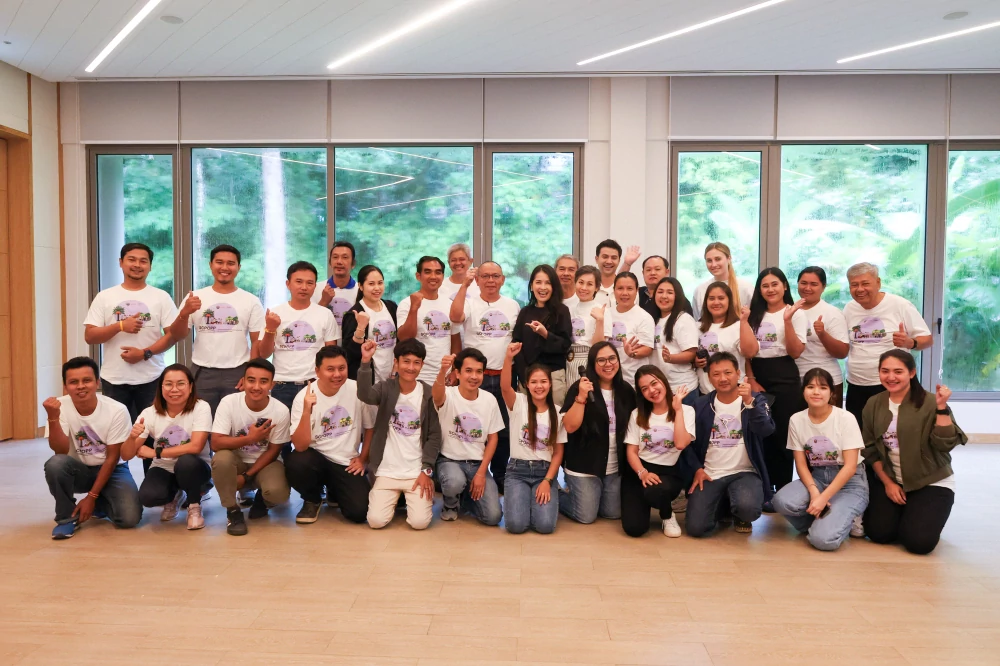
Project Performance during 2022–2024
- More than 1,000 smallholders have been organized into managed groups, covering approximately 32,000 rai of oil palm plantations in four provinces: Chumphon, Krabi, Trang, and Phang Nga.
- Memoranda of Understanding (MoUs) have been established between smallholder groups and palm oil mills to jointly promote sustainable palm oil production.
- A total of 49 trainers have been developed through the TOPSA curriculum.
- More than 1,000 smallholders in Thailand have been trained in sustainable practices and are prepared for RSPO certification.
Outcomes and Benefits
- In 2024, 1,077 smallholders were supported to obtain RSPO certification.
- Smallholder groups participating in the project increased their fresh fruit bunch (FFB) yield by more than 0.64 tons per rai and reduced their average production costs by more than 0.42 baht compared with pre-project levels. Member groups have continued to expand their membership each year after the project, in line with the objectives initially set by GGC.
SPOPP CLIMA Project
The Sustainable Palm Oil Production and Procurement Project on Climate Mitigation and Adaptation (SPOPP CLIMA) is an extension of the success achieved under the SPOPP project in securing RSPO certification for smallholder groups. SPOPP CLIMA was officially launched in August 2024 as a collaboration between GGC, the Deutsche Gesellschaft für Internationale Zusammenarbeit (GIZ) in Thailand, and the Department of Agriculture. The project focuses on building knowledge among smallholders so they can utilize existing data to calculate the carbon footprint of fresh fruit bunch (FFB) products and implement low-carbon plantation management practices. Reducing the carbon footprint not only mitigates environmental and climate impacts but also enhances the sustainability of the palm oil industry and strengthens the reputation of Thai palm oil products in global markets.
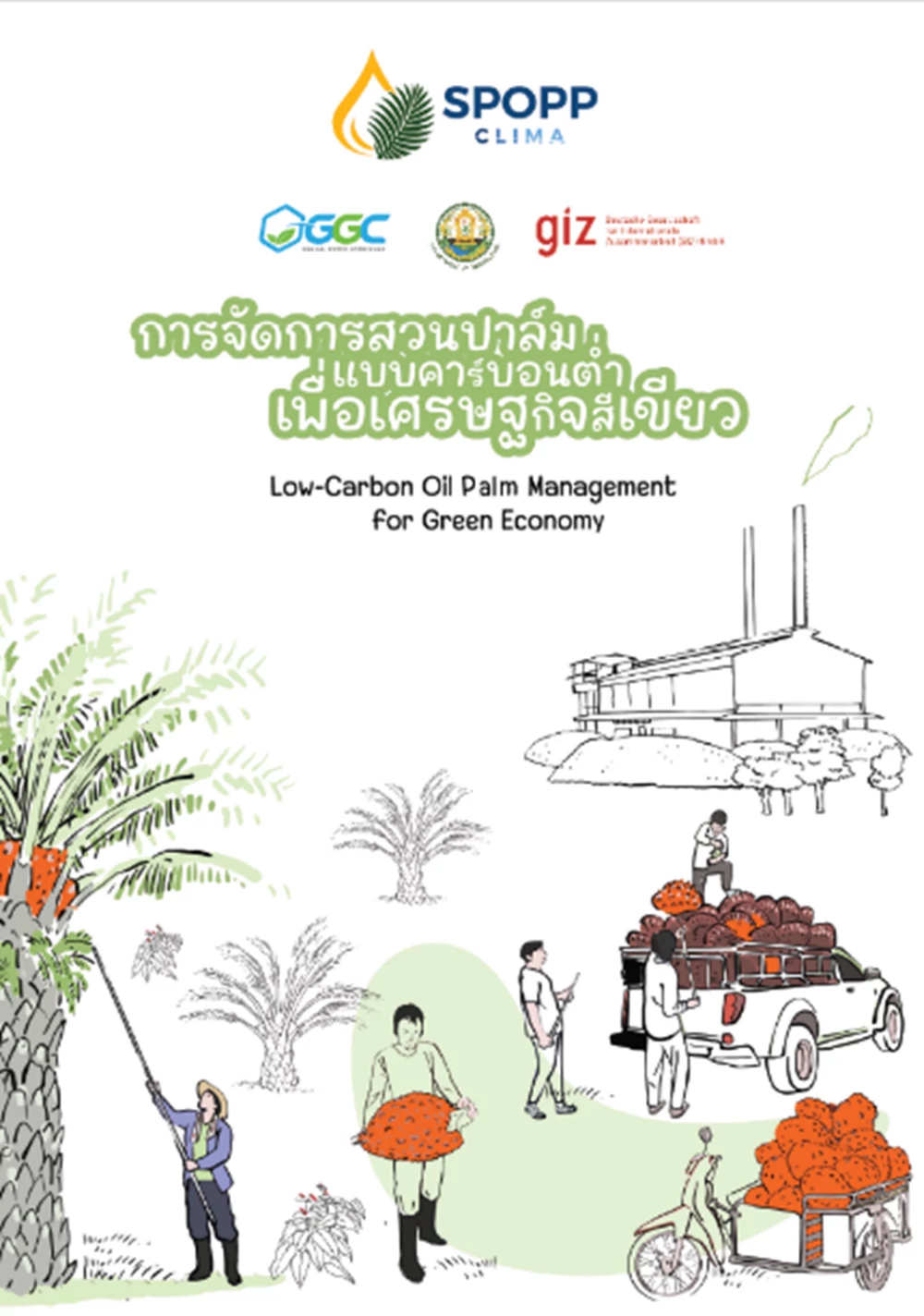
Project Objectives
The project aims to serve as a model for smallholders in Thailand on low-carbon oil palm plantation management, with key objectives to:
Promote and support smallholders in adopting low-carbon oil palm plantation practices.
Calculate the Carbon Footprint of Products for fresh fruit bunches using actual smallholder data.
Implementation Approach
- Development of a Carbon Footprint Calculation Tool for Fresh Fruit Bunches
The project is developing a tool to calculate the carbon footprint of FFB produced by smallholders, aligned with the requirements of the Thailand Greenhouse Gas Management Organization (TGO). - Data Collection and Baseline Carbon Footprint Assessment
The project collects and analyzes data on greenhouse gas emissions from smallholder plantation activities. This information is used to assess the carbon footprint and establish a baseline dataset. - Design and Delivery of Training Curriculum and Trainer Development
The project designs a training curriculum on carbon footprint concepts and carbon footprint calculation for FFB products tailored to smallholders. The curriculum will also be transferred to project trainers, who will subsequently pass on the knowledge to smallholders. - Establishment of Demonstration Plots for Low-Carbon Plantation Practices
The project identifies appropriate low-carbon practices for oil palm plantations and establishes demonstration plots where smallholders can observe and learn from practical examples. These plots highlight feasible practices that can motivate smallholders to apply them in their own plantations. - Assessment of Carbon Footprint Reduction for Fresh Fruit Bunches
The project evaluates the carbon footprint of FFB after smallholders implement low-carbon management practices and compares the results with baseline levels prior to project participation.
Project Progress in 2025
- Development of a carbon footprint calculation tool for oil palm cultivation in line with TGO requirements.
- Initial assessment and analysis of greenhouse gas emissions from oil palm smallholders, including the establishment of a project database and verification of data accuracy for six smallholder groups.
- Pilot implementation and training on carbon reduction measures, including the identification and selection of suitable low-carbon practices for smallholders.
- Development of the “Low–Carbon Oil Palm Management for Green Economy” training curriculum as a practical guideline for smallholders participating in the project.
- Delivery of “Low–Carbon Oil Palm Management for Green Economy” training courses to mill operators and smallholder group representatives in the project, in order to build and expand knowledge on low-carbon cultivation practices among project members.
- Selection of demonstration plots to pilot low-carbon plantation practices.
Outcomes and Benefits
- Development of Thailand’s first “Low–Carbon Oil Palm Management for Green Economy” handbook and training curriculum, which has been officially accredited.
- A total of 50 trainers have been equipped with knowledge on low-carbon plantation management to transfer this expertise to 1,000 project members.
- Establishment of 12 demonstration plots with a total area of 169.62 rai, serving as pilots for low-carbon oil palm cultivation practices.
Health & Personal Care Product Project (Koh Kok SE MODEL)
GGC supports the Koh Kok Community Enterprise in Rayong Province through the Health & Personal Care Product Project (Koh Kok SE MODEL), which focuses on producing personal hygiene products and developing the Rice Care product line. GGC aims to strengthen the Rice Care brand as a role model Social Enterprise (SE) initiative by building knowledge, empowering the Koh Kok Community Enterprise to serve as a pilot SE project, and developing plans to expand and support other communities in the future.
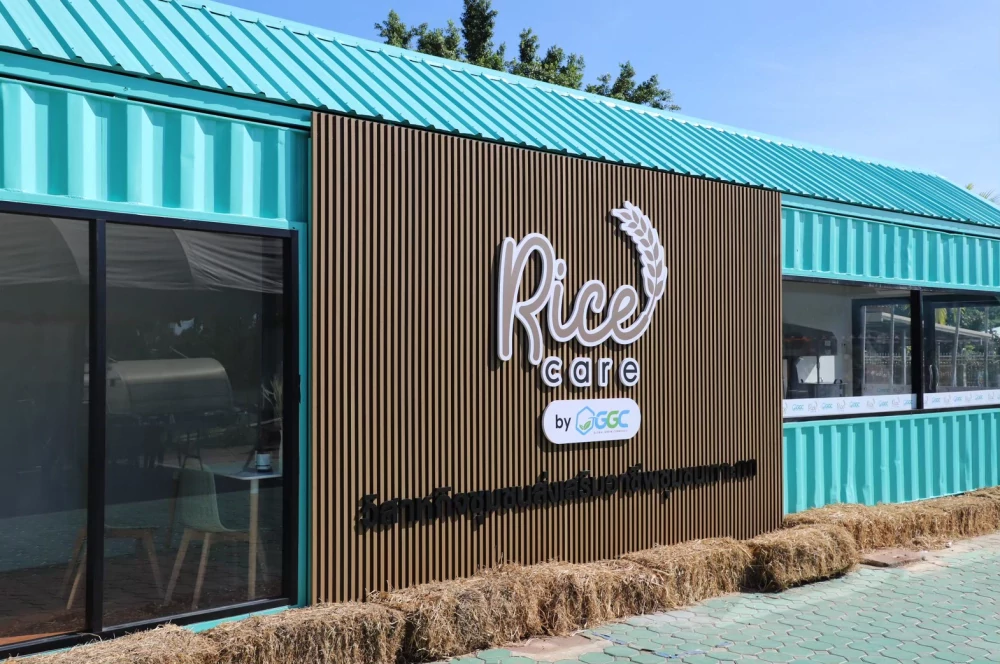
Progress of the Health & Personal Care Product Project (Koh Kok SE Model) in 2025
- Expand distribution channels for Rice Care products on Lazada and Shopee under the Koh Kok store name, and expand distribution through the “Quality and Unique Products from All Over Thailand” support program. This program is operated by PTT Oil and Retail Business Public Company Limited (OR), with the objective of enhancing quality of life and strengthening the economy of Thai communities and society.
- Develop and produce additional new products to align with market demand
Outcomes and Benefits
- The Koh Kok Community Enterprise has enhanced its capacity to produce and commercialize personal hygiene products in a sustainable manner.
- The community has been encouraged to produce products under the Rice Care brand using GGC’s RSPO-certified raw materials, thereby creating shared sustainability value with the community.
- The project serves as a role model for strengthening the local economy and promoting sustainable community development.
Green Health Project
GGC implements the Green Health Project in collaboration with business partner Standard Manufacturing Co., Ltd. to produce CHOB-brand hygiene products such as alcohol gels and alcohol sprays. GGC also works with the Luffala Community Enterprise Group in Rayong Province to produce liquid hand soap using food- and pharmaceutical-grade Glycerin with a purity of 99.5% as the main ingredient. This flagship project demonstrates how GGC’s innovations and products can be leveraged to address community and social issues, while promoting participation from employees, the company, stakeholders, communities, and society. The project contributes to economic development and quality of life improvements and aligns with GGC’s CSR strategy to support sustainable development.
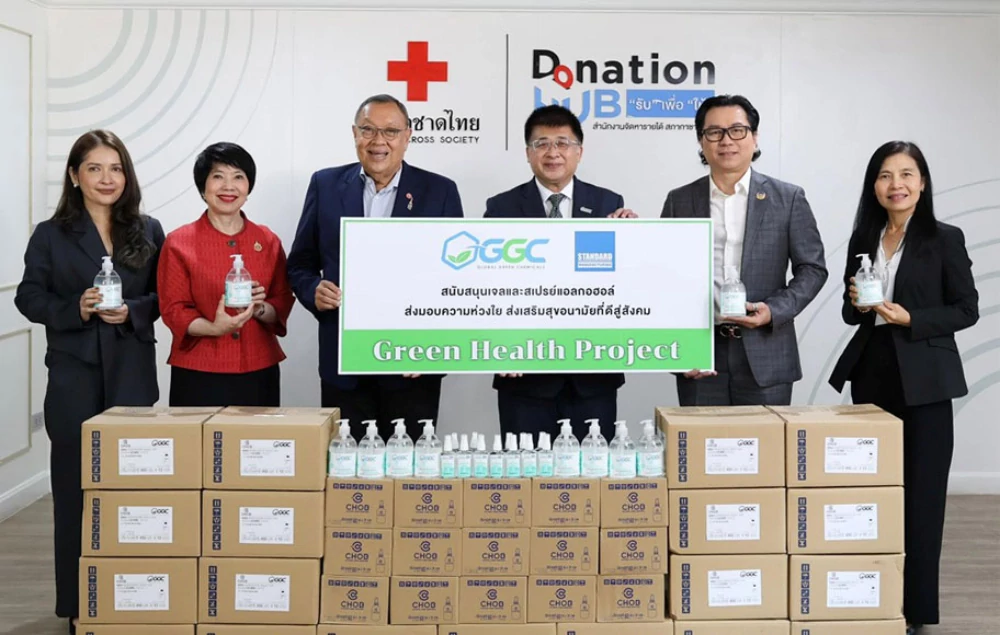
Outcomes and Benefits
- Support the development of 10,000 bottles of high-quality, safe hygiene products for communities and society.
- Promote good hygiene practices by distributing products to government agencies, communities, and the wider public.
- Serve as a model of collaboration between the private and public sectors in addressing public health and hygiene challenges.
Community and Local Stakeholder Engagement
GGC recognizes that feedback from communities and stakeholders is critical to enhancing the effectiveness of its operations. GGC therefore provides multiple communication channels to ensure that communities and stakeholders can meaningfully participate and share their views through the following mechanisms:
Communication with Community Stakeholders
GGC is committed to maintaining clear and transparent communication with local stakeholders to foster meaningful engagement. GGC provides regular and accurate updates on its operations, plans, and potential impacts in a timely manner.
The key objective is to establish two-way communication that enables stakeholders to express their views, request information, and participate effectively in GGC’s decision-making processes. To support this objective, GGC has established dedicated platforms and channels for comprehensive communication and feedback, including:
1. Weekly Community Visits
GGC places great importance on building strong relationships with local communities in Rayong and Chonburi provinces through weekly community visits. These activities aim to encourage knowledge sharing, provide health support, participate in volunteer and cultural events, and listen to community concerns related to GGC’s operations. Weekly visits serve as a key channel for communities to express their views, exchange information, and raise questions directly with GGC. At the same time, GGC ensures timely and accurate communication on operational plans and potential impacts so that communities receive complete and transparent information.

2. Whistleblowing Channels
GGC has an open policy for receiving feedback, suggestions, questions, or grievances related to corporate governance, stakeholder concerns, and operational impacts. GGC welcomes information from both internal personnel and external parties on an equal basis.
Information received from whistleblowers, including all relevant details, is used solely for fact-finding and investigation. GGC is committed to maintaining strict confidentiality in accordance with internal regulations and ethical standards. Whistleblowers are encouraged to provide accurate, complete information and sufficient evidence to facilitate fair and appropriate investigation. Whistleblowing channels are specified under
Grievance Tracking
GGC values the participation of local stakeholders and has developed clear and accessible grievance mechanisms to enable all parties to raise concerns or complaints. Local stakeholder engagement is aligned with GGC’s CSR and community engagement strategy. Accordingly, GGC has established channels for communities to report issues or conflicts, along with a whistleblowing policy that encourages the reporting of inappropriate behavior or actions that may violate business ethics. These mechanisms ensure that local stakeholders can submit information safely and transparently, including supporting documents via GGC’s Whistleblowing channels All grievances are handled fairly, transparently, and with due care. GGC guarantees fairness for all parties, protects confidentiality, and safeguards whistleblowers and related witnesses from retaliation throughout the process.
In 2025, there were no grievances reported by communities surrounding GGC’s production facilities in Rayong and Chonburi Provinces.

For additional information on the whistleblowing system and grievance mechanisms: Business Conduct Ethics and Compliance and GGC’s Whistleblowing channels
Community Satisfaction Survey
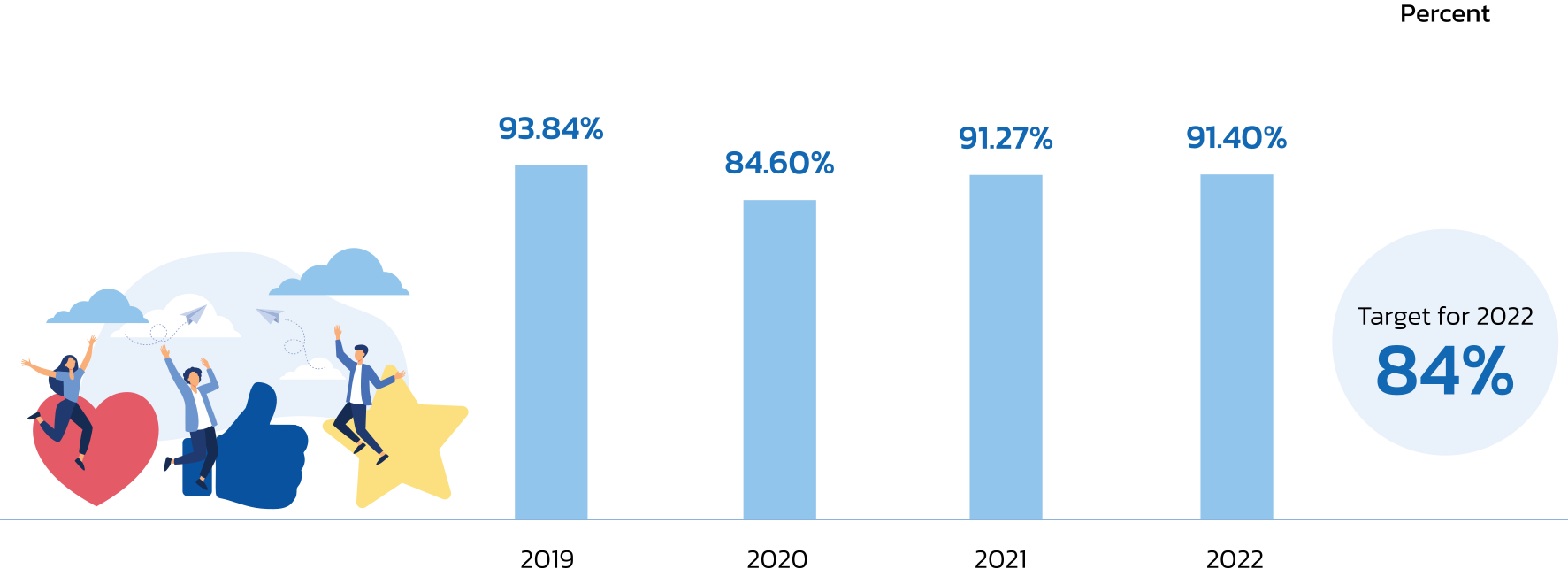
GGC’s continuous social responsibility efforts include regular community satisfaction surveys. In 2024, the community satisfaction score reached 92.64%. In 2025, GGC engaged an external organization for the first time to conduct a satisfaction survey of the Nong Yai community. The results reflect a strong relationship between GGC and surrounding communities and society.
Community Complaints Received Through Other Channels
| 2022 | 2023 | 2024 | 2025 | |
|---|---|---|---|---|
| Social and Community Complaints (cases) | 0 | 0 | 0 | 0 |